Navigating the Intersection of AI and Healthcare Accessibility

Project Overview
This thought leadership paper delves into the intricate relationship between data privacy and the integration of AI in healthcare. By examining what privacy means in the context of healthcare and elucidating its significance, we aim to explore the potential implications of AI adoption on the industry's perception
Role
User Researcher
Methodologies
User Survey, Data Analysis
Tools
Microsoft Forms
Timeline
Jan-March 2024
How can the integration of AI in healthcare be conducted in a manner that upholds patient privacy rights and maintains trust in the healthcare system?

This thought leadership paper delves into the intricate relationship between data privacy and the integration of AI in healthcare. By examining what privacy means in the context of healthcare and elucidating its significance, we aim to explore the potential implications of AI adoption on the industry's perception.
Through this exploration, we seek to shed light on the challenges and opportunities that arise at the intersection of data privacy and AI in healthcare. Ultimately, we strive to provide insights that can inform stakeholders, policymakers, and industry leaders in navigating this complex landscape effectively.
This section of the research paper focusses on the User Research condcuted to analyze current attitudes towards potential AI integration in healthcare.
Identifying Privacy Vulnerability Triggers in AI-Healthcare Integration
Through a survey, we sought to identify ways to make healthcare information more universally accessible with AI, and the potential triggers of privacy vulnerability associated with the integration of AI. Recognizing that individuals' perceptions of privacy are influenced by various factors, including trust, transparency, and perceived risks, we designed our survey to delve into the emotions and concerns evoked by potential privacy breaches.
By exploring attitudes toward data privacy in the context of AI-driven healthcare solutions, we aimed to uncover the specific triggers that elicit feelings of vulnerability among respondents. These triggers may include concerns about unauthorized access to personal health information, data breaches, algorithmic biases, and the potential misuse of AI-generated insights.
By gaining a nuanced understanding of these triggers, we aimed to inform strategies and interventions aimed at mitigating privacy risks and fostering greater resilience among individuals in the face of AI-driven healthcare transformations.
We designed our survey questions to cover a wide range of aspects, aiming to identify triggers that could positively or negatively influence the overall perception of the brand. This approach allowed us to gather diverse perspectives and gain valuable insights into the factors impacting brand perception, facilitating informed analysis and decision-making.
Survey Results And Analysis
Top Triggers as per customer survey:
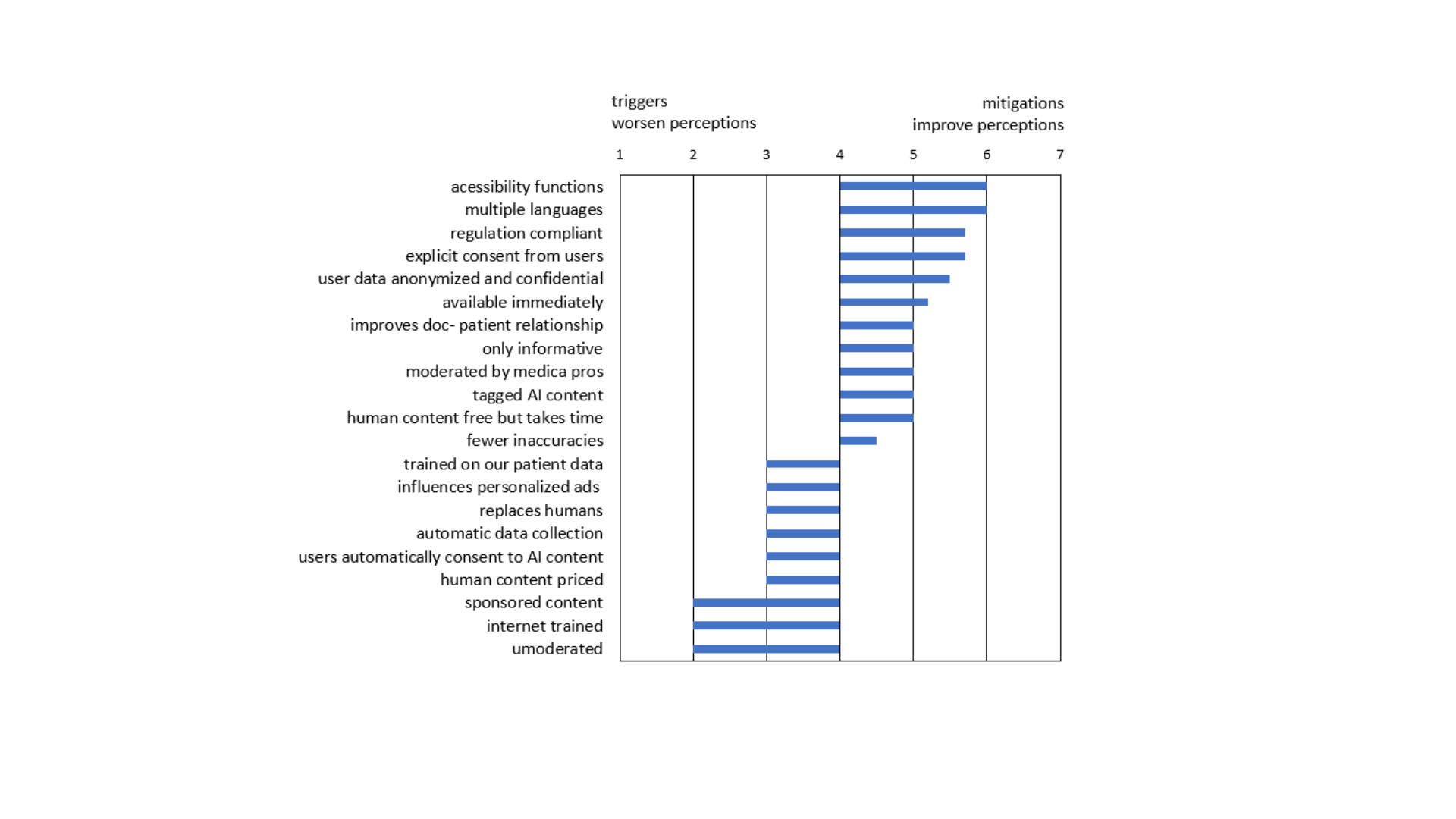
Our customers main concerns were about data privacy, security and consent, trust in AI content and the company not taking humans considerations.
Not having control over how their data is being used (searches, training the AI), how the consequences of that would affect them (personalized ads, sponsored content) and not having consented to that in the first place significantly worsened their perception of AI being used.
The data shows that customers are also skeptical of the AI’s credibility especially if published content is not human moderated and explicitly tagged as written by AI. Customers also expressed concern for people’s job security – having to pay for human written content which might eventually replaced by AI.
As we know more about our customers concerns, the company has outlined a course of action to mitigate these triggers.
Top Mitigations as per customer survey:
Transparency from the company about scope and limitations of their use of AI in the blog, maintaining HIPAA compliance, and multiple accessibility features were points which significantly improved our customers perception of the company’s use of AI.
Customers expressed positivity towards the company explicitly tagging AI written content, approved my medical professionals and moderated by humans before publishing only informative content.
Customers also valued having control over the choice to consume AI generated content, remaining anonymous, and having access to improved accessibility features for diverse audiences including audio and visual support and translation into multiple languages.
Our company has outlined a course of action taking these positive perceptions into consideration.
Value of Privacy in Healthcare with AI Integration
In healthcare, design decisions wield significant influence over patient safety and privacy, emphasizing the critical need to prioritize ethical User Experience (UX). Ethical UX encompasses not only usability and accessibility but also fundamental ethical principles such as transparency, autonomy, and beneficence.
Moreover, compliance with regulations such as the Health Insurance Portability and Accountability Act (HIPAA) is essential in ensuring the protection of patient health information and maintaining confidentiality. This will also improve patient trust, foster positive user interactions, and ultimately elevate the delivery of healthcare services.
UX Best Practices
Make the information simple to understand, so as to not confuse the user.
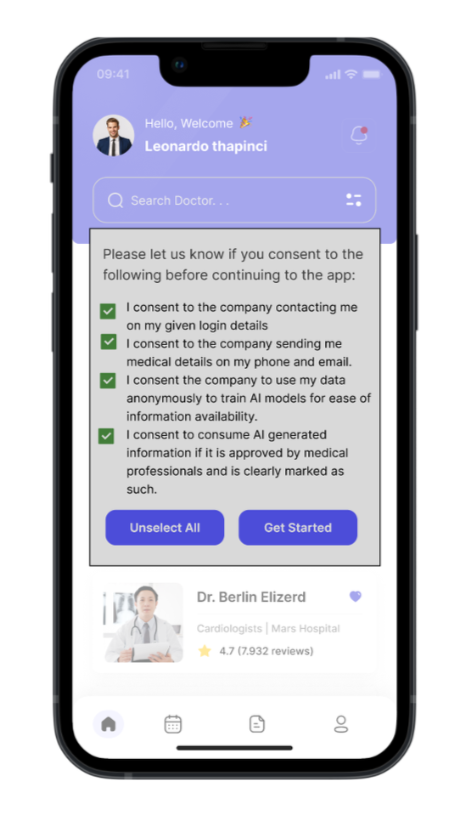
Make it easy for the user to allow complete or partial consent, or to not allow consent for specific choices.
Take explicit consent for each -
any kind of outreach
leaving detailed information
create personalized content
use personal data, anonymously, to train AI models
Do Not:
Use jargon and complicated sentences to make it hard for people to understand.
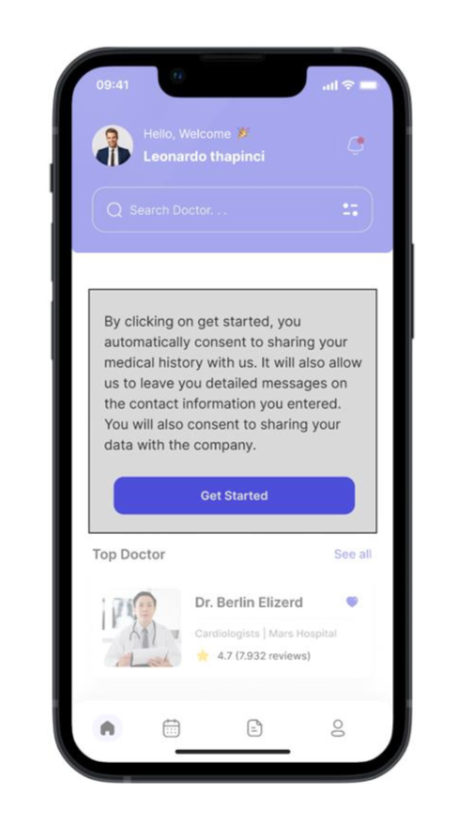
Have no option for the user to NOT give consent - thereby making this a roadblock for them.
Ask explicit consent for only one thing, but include more detailed explanations of what they're actually agreeing to in small print or hidden in the document, making it tricky for them to catch.